The current pitch decks
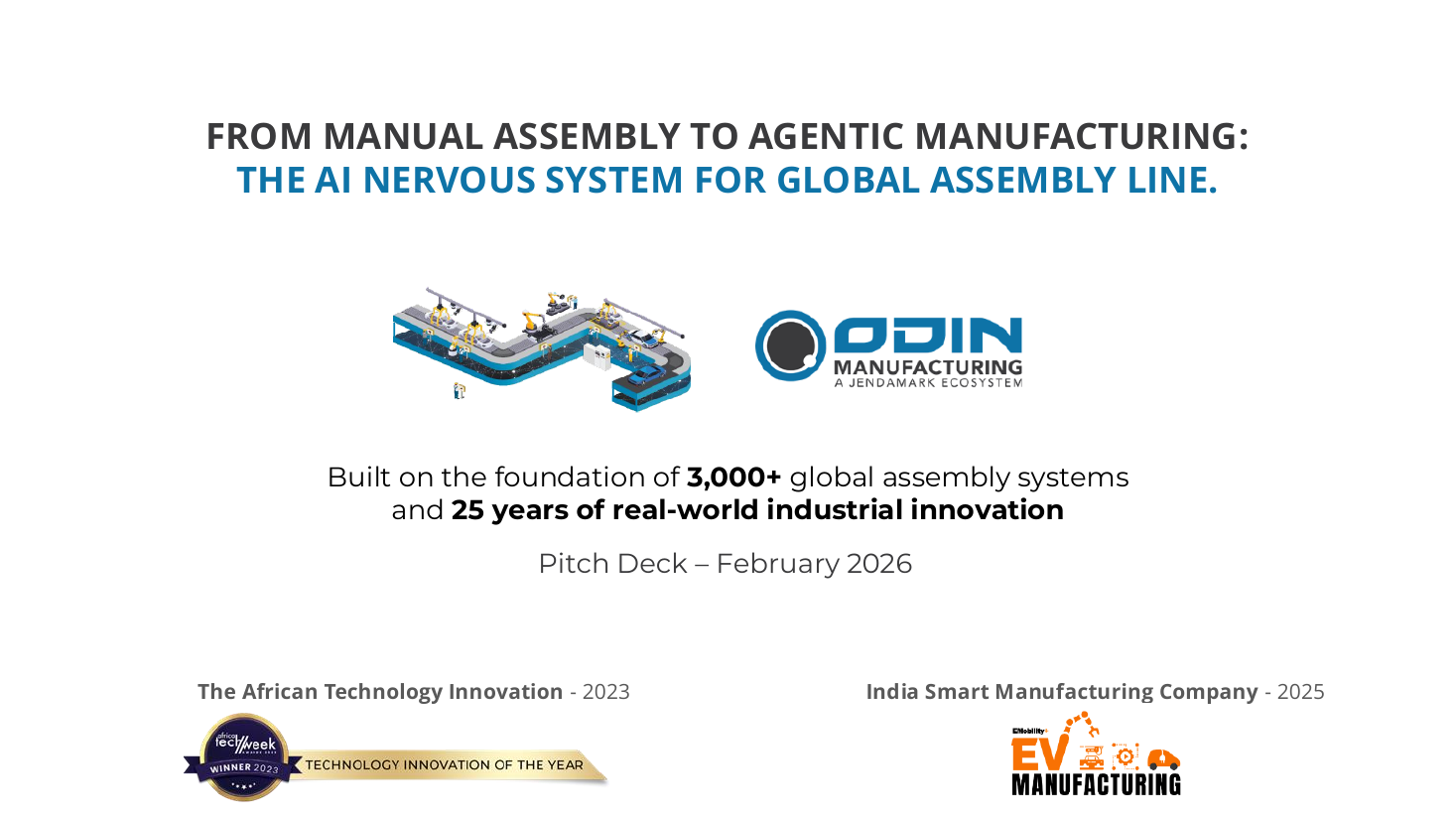
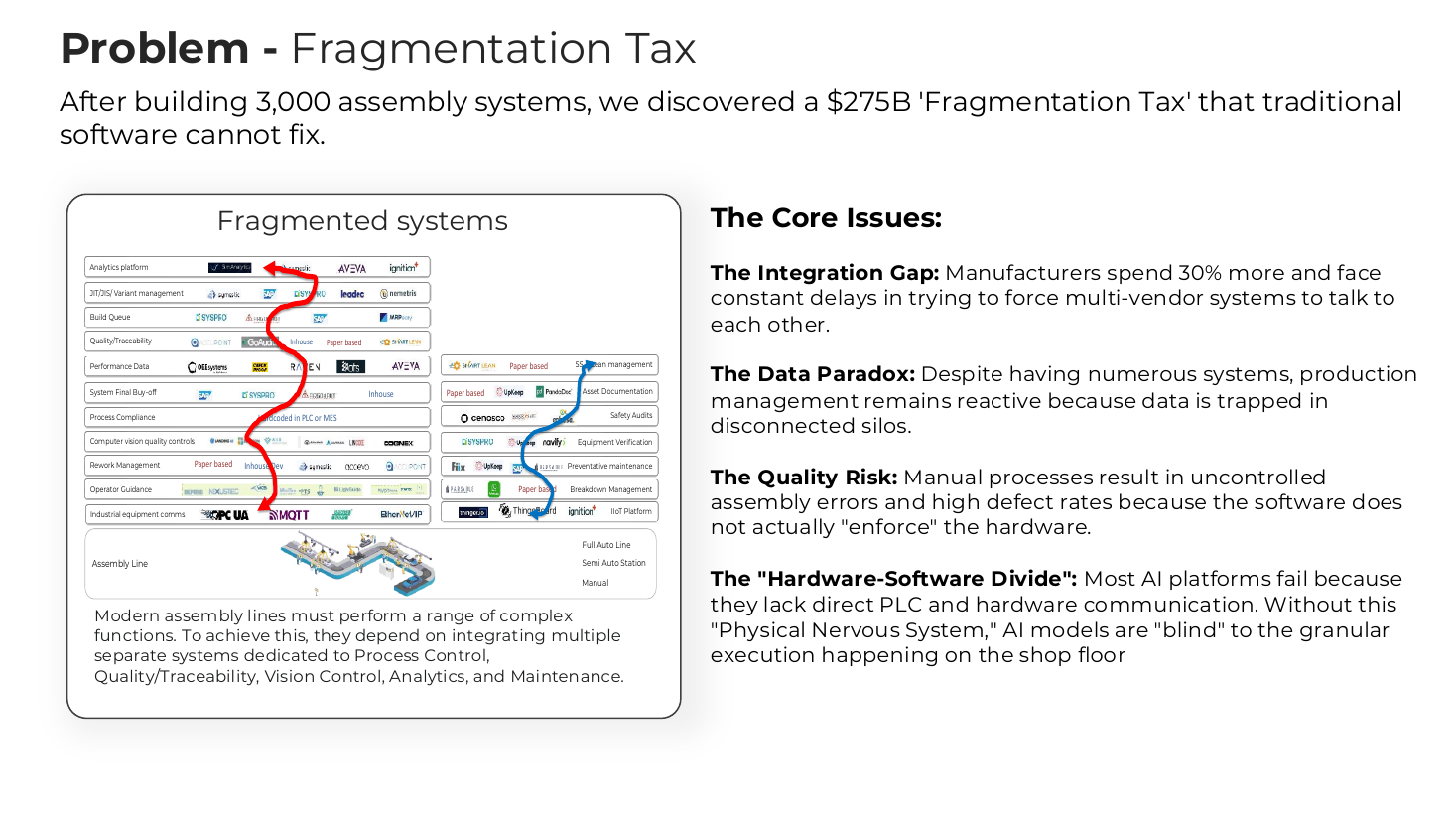
The February 2026 pitch decks are the project so far, now due a refresh. They hold most of the existing context and language, and they are the starting point the category work refines, not replaces.
Strong material, three voices
The decks carry real proof and a genuine differentiator. The issue is that they run three category stories at once, which is why the product wins demos and the website does not land.
The enforcement wedge is already there
"Hardware-level enforcement", "automatically disable a tool out of sequence or position", "direct PLC communication". This is the true differentiator and the root of enforced assembly. It is the line to lead with.
The proof and the pedigree
85-plus lines, 5M-plus products, named-customer outcomes (Tenneco, Audi, ZF), and the Jendamark engineering heritage. This is the credibility the category stands on.
Three category stories at once
"Agentic AI nervous system", "Assembly Line OS", and "hardware enforcement" pull in three directions. AI is crowded and owned; OS is contested; enforcement is the ownable one. The refresh resolves the three into one category.
Lead with enforcement, not the AI nervous system
The cover leads with "agentic" and "AI nervous system", which puts ODIN in NVIDIA's and Cognite's neighbourhood. The refresh leads with the unenforced-line villain and enforced assembly, and keeps the agents as roadmap.
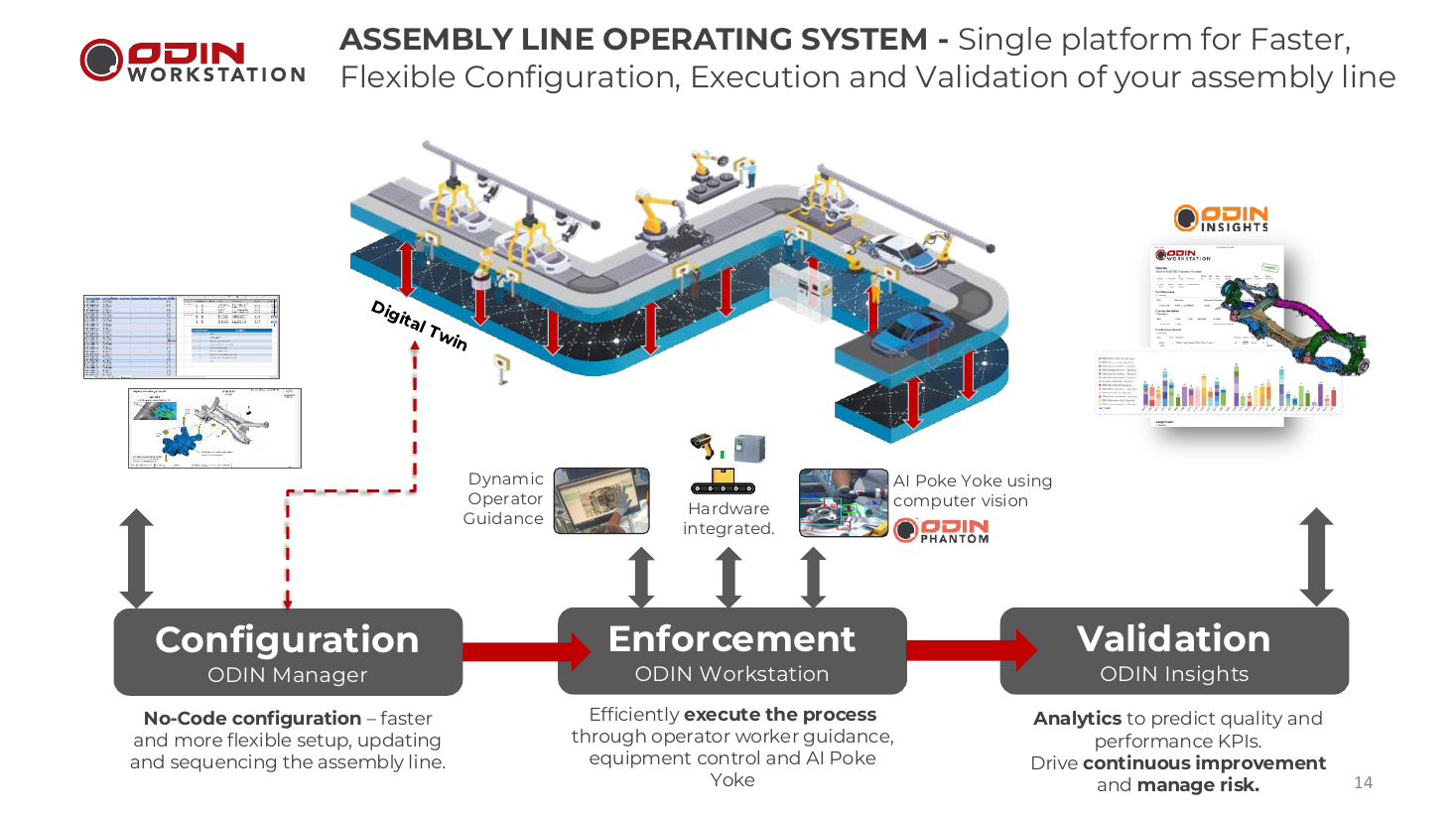
The refresh rebuilds the deck from the point of view: open on the unenforced line, name enforced assembly at the turn, set the four rules, and bring the proof and the Jendamark pedigree to the close. The material is strong; it needs one category, not three.