What the sales team already sells
Stanley Tan's customer materials (a three-minute pitch, a Workstation deck, a Checkpoint deck) are the clearest signal of how ODIN sells when it is winning. They land, independently, on control and authority. They are strong supporting evidence for an enforcement-led category, not a thing to push back on.
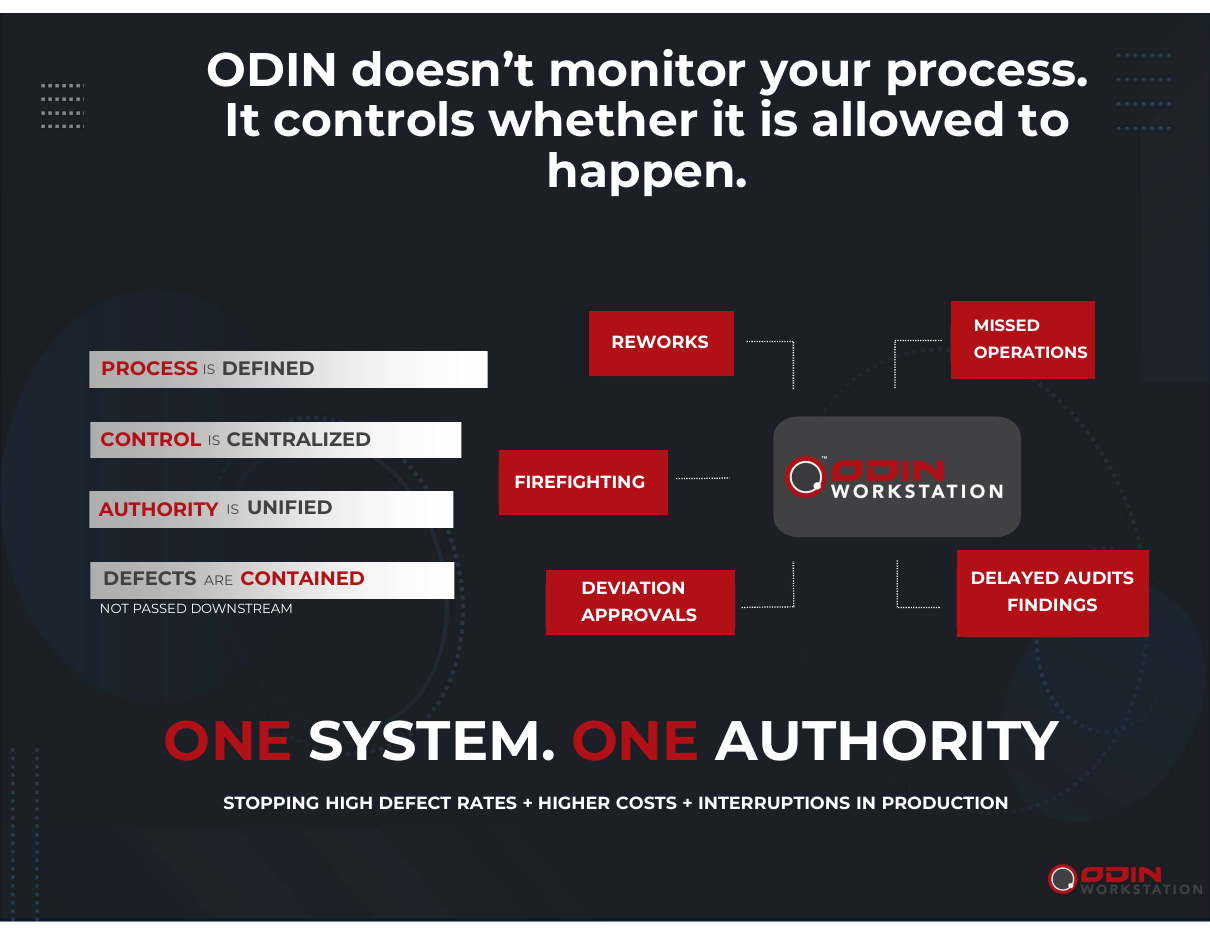
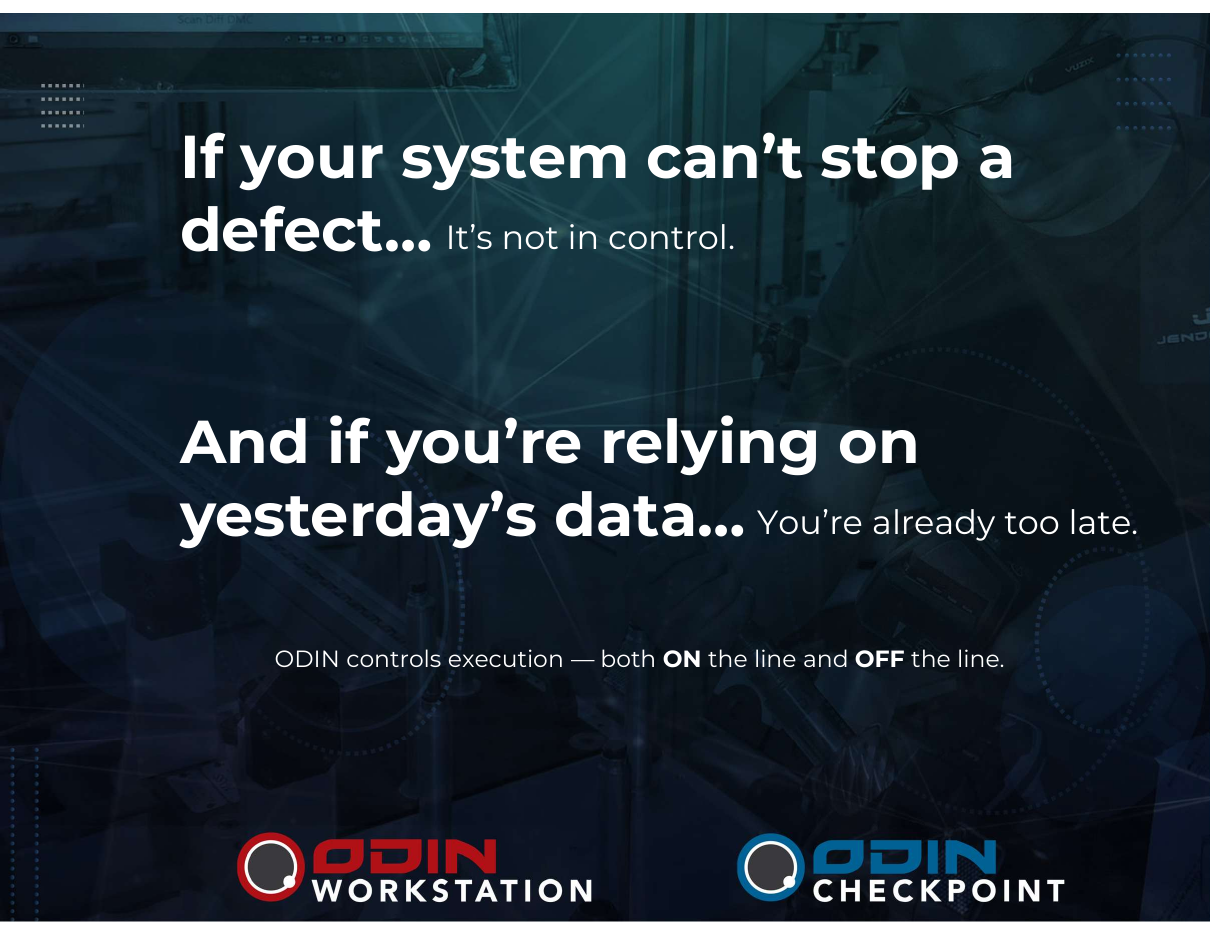
The sales motion is already enforcement-led. "The Production Authority for the modern assembly line", "controls whether it is allowed to happen", "no system has the authority to stop it". The category names what the team already sells.
Three reads for the category
Control and authority are the live sales language
The pitch leads with "The Production Authority", "ODIN controls whether it is allowed to happen", and "one system, one authority". This is enforced assembly in the field, before the category was named. It validates leading on control rather than proof or AI.
"No system has the authority to stop it"
Stanley frames the enemy as the line that cannot stop a defect in time, where "relying on yesterday's data" means "already too late". That is the unenforced line, stated in sales terms. The villain travels.
The phrases that should survive into the launch
"Built to run." "Controls whether it is allowed to happen." "Defects are contained, not passed downstream." "On the line and off the line." These are sharp, plain, and on-category, and belong in the messaging platform.
The AI-forward framing on the cover
The title "the world's first AI-Enforced manufacturing ecosystem" leads with AI, where the engineering read and the rest of the deck lead with enforcement. Align the cover to the body: enforcement first, AI as the consequence of owning the layer.